
+86-574-87520996
sales@fzmag.com


FAIZEAL
OEM Arc / Tile Magnetic Segment for Wall-Climbing Robots
Custom Sintered NdFeB Arc Magnets — Sealed, Sized Without Limit, Built to Order
Full Sealing Technology | No Size Limit | In-House Production | Export-Ready
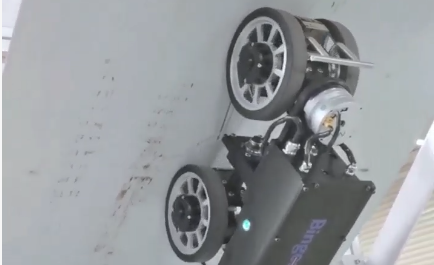
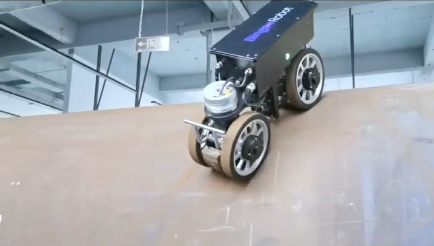
The motor and the gearbox decide how fast your wall-climbing robot can move. The magnetic segment decides whether it can move at all. The arc / tile / segment magnet is the actual contact-and-adhesion interface between the robot and the steel surface — and it is the component that determines holding force, pole uniformity, air-gap tolerance, and corrosion survival.
Since 2017, FAIZEAL has been engineering custom sintered NdFeB arc / tile / segment magnets for wall-climbing robots deployed across ship hulls, storage tanks, wind turbine towers, bridges, pipelines, nuclear containment shells, and offshore platforms. Every arc is built to your radius, your pole pitch, your grade — and it is sealed for the real world, not the lab.
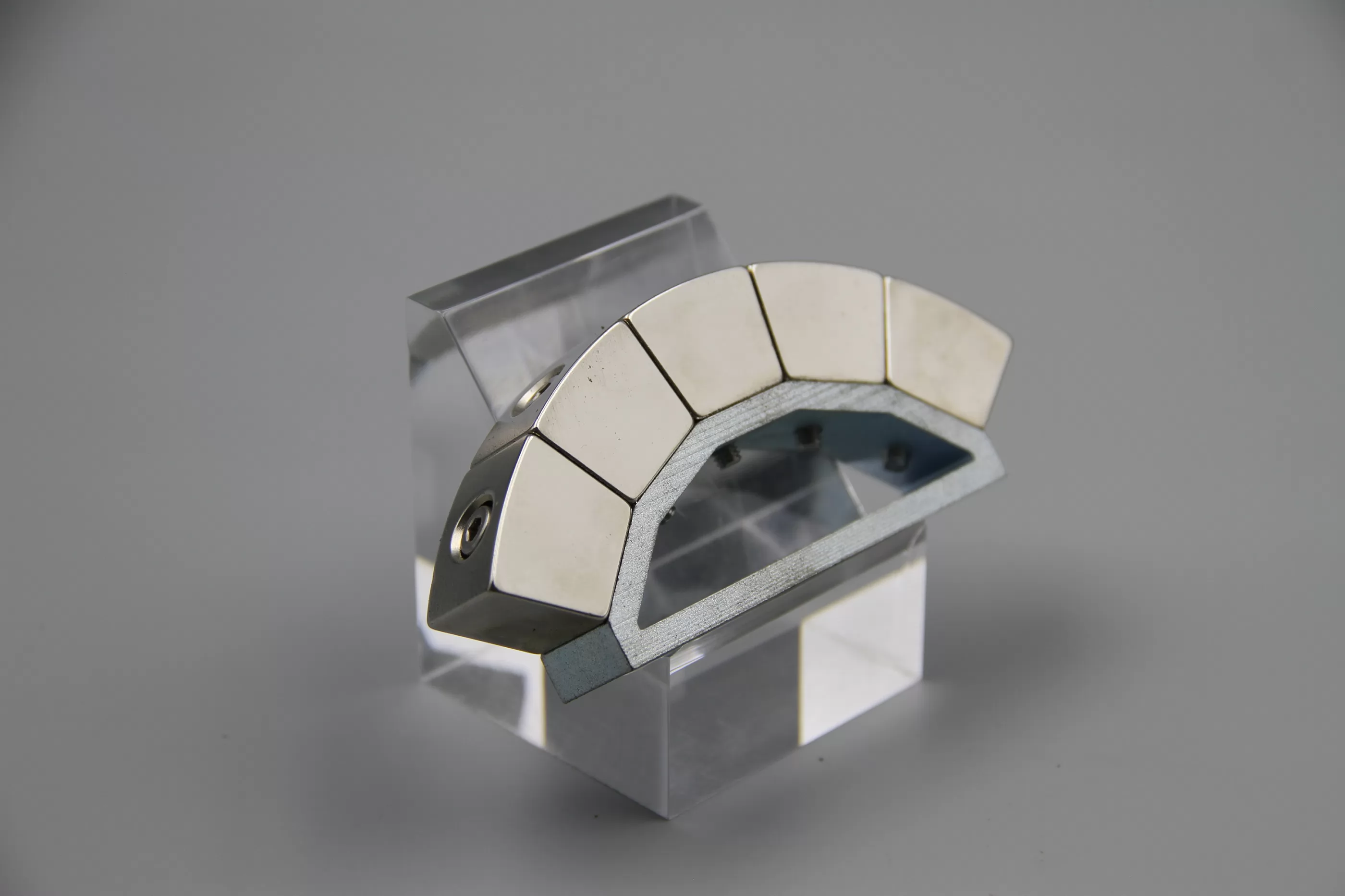
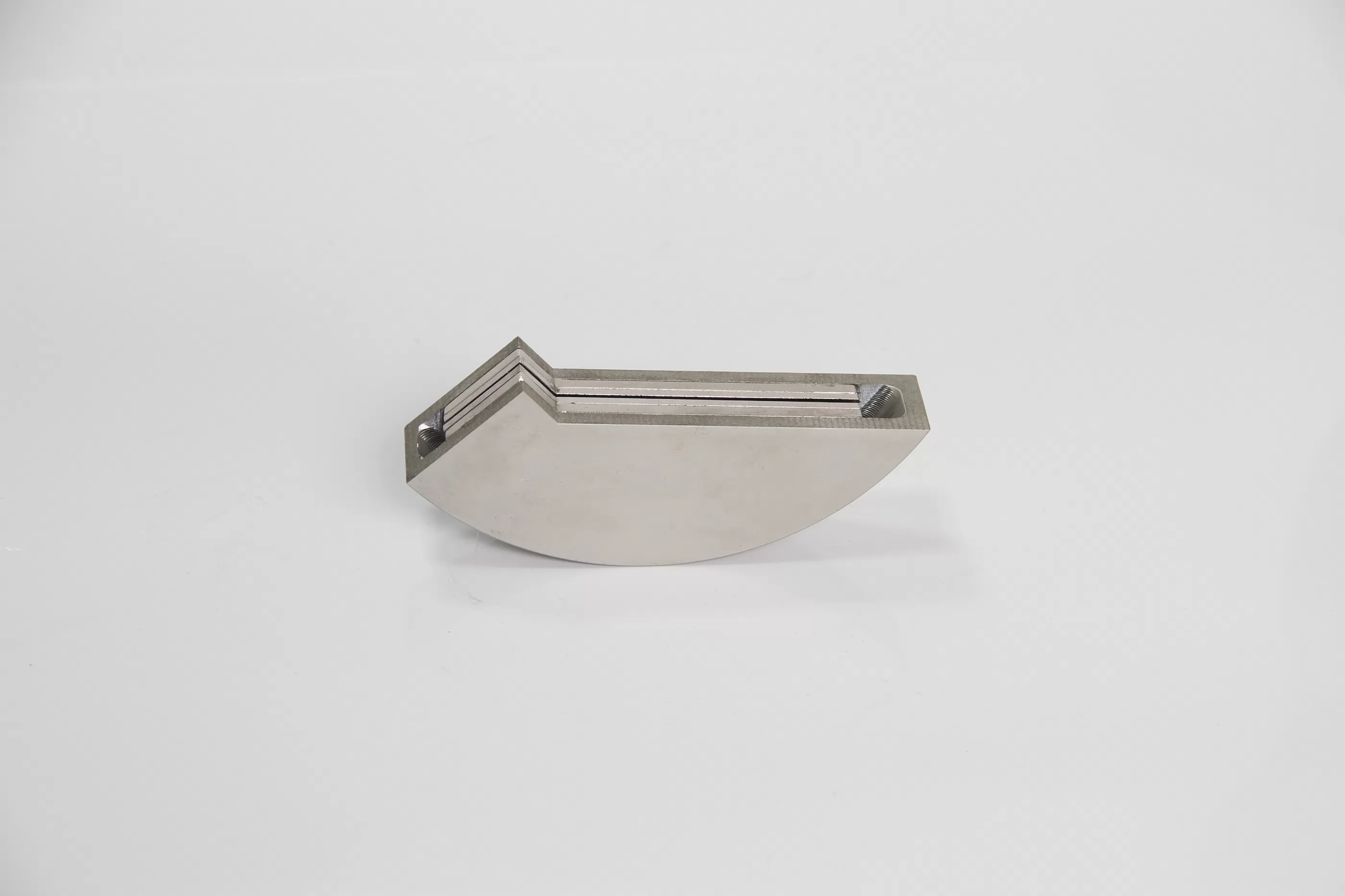
An arc / tile magnetic segment (also called a tile magnet, curved segment, arc magnet, wedge magnet, or pole shoe) is the precision-ground NdFeB building block of a wall-climbing robot's magnetic circuit. Multiple segments are arranged in a ring, an arc, or a Halbach array and bonded to a soft-magnetic back iron to form the robot's adhesion face.
Typical construction:
• Sintered NdFeB arc body, ground to +/-0.03 mm (or +/-0.01 mm precision) on every face that matters
• Multi-pole magnetization: radial, axial, or Halbach — selected to maximize specific force per gram
• Anti-corrosion coating matched to the working environment: Ni, Zn, epoxy, PTFE, parylene, or multi-layer composite
• Sealing layer — encapsulation, potting, sealed pole shoe, or full IP67 — to keep out salt spray, chemicals, dust, and humidity
• Adhesive or mechanical bond face prepared for direct assembly to your back iron, hub, or housing
The segment is the smallest unit that defines a wheel's performance. A perfect ring assembled from imperfect segments is still imperfect. That is why every FAIZEAL arc is metrologically verified, magnetically tested, and dimensionally traceable before shipment.
• Ship hull inspection, cleaning, blasting, and repainting robots
• Above-ground and in-service storage tank shell inspection robots
• Wind turbine tower and nacelle climbing platforms
• Bridge cable-stay and steel box girder NDT (ultrasonic, magnetic particle, eddy current)
• Oil & gas pipeline exterior scanning and in-line inspection robots
• Nuclear and petrochemical pressure vessel exterior wall inspection
• Spray painting, anti-corrosion coating, and fireproofing robots
• High-rise steel structure, dam, and chimney inspection platforms
If your robot adheres to steel, your robot has an arc segment problem — and we have already solved a version of it.
This is where off-the-shelf arc magnets fail. Stock segments force your wheel design to bend around a catalog. We do it the other way: your drawing, your duty, your robot — and the arc is built to match.
• No upper size limit. We have produced arc segments for wheels from Ø30 mm precision inspection rollers up to Ø800 mm+ heavy-payload drive wheels
• Outer radius, inner radius, axial length, arc angle, and pole pitch are all per your drawing
• Need an odd aspect ratio (ultra-thin tile, ultra-wide arc, fractional pitch for a 48-pole rotor)? Tell us the constraint — we redesign the segment, not your wheel
• Conventional radial multi-pole: balanced, easy to assemble, predictable
• Halbach array (single or dual layer): up to ~30% higher specific force on the contact face, lower back-iron mass, our proven track record — we already ship Halbach rotor assemblies to robot-joint customers
• Axial pole pattern: for pancake-style and thin-format magnetic wheels
• Magnet grade from N35 to N52, plus SH / UH / EH for high-temperature and high-coercivity duty
• Salt-water marine duty: multi-layer coating stack (Ni base + epoxy mid + parylene or PTFE top) on every face including the pole shoe
• Full encapsulation / potting: the segment is sealed inside a polymer, eliminating any path for water ingress
• Sealed pole face: cap the pole with a thin stainless or titanium shim while preserving flux transmission to the contact face
• IP67-class protection for the assembled magnetic stack on request
• Chemical/splash exposure: FKM (Viton), PTFE, or DLC-faced options for aggressive chemical environments
• Sealing is not a coating we add — it is a layered protection scheme designed around your specific duty, validated by salt-spray, immersion, and humidity cycle tests
• Standard tolerance +/-0.03 mm on all ground dimensions
• Precision tolerance +/-0.01 mm on critical fit faces (back-iron interface, pole-to-pole gap)
• Surface roughness Ra <= 0.8 um on pole faces for uniform air-gap management
• Full metrology report (CMM trace) shipped with every batch on request
• Bonded assembly: adhesive-ready face prepared with controlled roughness and cleanliness
• Mechanical interlock: dovetail, T-slot, or custom key on the back face for shrink-fit or clamp assembly
• Pre-magnetized or demagnetized shipment per your assembly flow — we do not force a sequence on you
• Matched sets delivered together: pole-to-pole gap controlled across the entire ring for uniform flux distribution
• High-temperature operation up to +200 C (EH-grade NdFeB + high-temp-rated coating)
• Low-temperature / cryogenic variants for arctic vessel and offshore structures
• Spark-safe construction for ATEX / explosion-proof robot environments
• Clean-room compatible low-particulate coating and packaging
• Conductive or static-dissipative coatings for tank interiors near flammable vapors
We treat every arc segment as a designed system, not a stock part:
• Magnet grade selection: N35, N38, N42, N48, N50, N52 — chosen for the required pull force per gram, not for catalog rating
• Grain-size & grain-boundary control: heavy-rare-free, heavy-rare-doped, or grain-boundary-diffusion grades available, optimized to balance cost, flux, and coercivity
• Back-iron interface: arc geometry matched to your back-iron profile to eliminate flux bottlenecks at the pole shoe
• Air-gap management: pole-face flatness and roughness matched to your tread / housing thickness so the robot maintains maximum holding force on slightly rusty or painted surfaces
• Temperature stability: HcJ, urec, and irreversible-loss budget computed so your wheel survives the project's max operating temperature, not just room temperature
We do not outsource the steps that define your wheel's performance:
• NdFeB magnet sintering, grain-boundary diffusion, and pulse magnetization through controlled, audited supply chains
• Multi-axis grinding and slicing of arc bodies — concentricity, parallelity, and angular accuracy held to specification
• Coating line: Ni, Zn, epoxy, PTFE, parylene, DLC, and multi-layer stacks, with salt-spray test reports per batch
• Sealing line: encapsulation, potting, sealed pole face, and full IP67 verification for sealed orders
• Magnetization: pulse magnetizer up to multi-Tesla, with field-mapping available for Halbach and multi-pole orders
• 100% inspection: dimensional CMM, surface roughness, coating thickness, and magnetic flux test on every batch
• Full traceability: per-segment batch record, magnet lot, coating run, sealing record, and test data shipped with the goods
1. 10 years of magnet-component engineering — NdFeB, Halbach arrays, magnetic couplings, rotor assemblies, and pot magnets. We do not subcontract magnetic know-how.
2. Custom is our default — every arc BOM is open to your design rules and constraints
3. Full in-house production and assembly — from sintering to sealing, on one engineering thread
4. Sealing is a designed subsystem, not a coating — engineered for your duty, validated by tests we run on our own floor
5. No upper size limit — from Ø30 mm precision segments to Ø800 mm+ heavy-payload arc sets
6. Export-ready documentation — DDP/FOB/EXW terms, REACH/RoHS/CE documentation packs, NDA-friendly engineering workflow
Yes. Outer diameter is not a limiting parameter for us. Tell us the OD, the arc angle, the pole pitch, and the required pull force — we will back-propose the segment geometry, grade, and sealing scheme.
A conventional radial segment needs a thick back iron to channel flux to the pole face. A Halbach array is magnetized so that the field is self-shaping — this can give you up to ~30% higher contact-face flux for the same magnet mass, or the same flux with a much thinner back iron. The trade-off is tighter magnetizing tolerance and higher unit cost. We help you decide which side of that trade-off your robot should be on.
For splash-zone or fully submerged salt-water duty, we typically recommend a multi-layer coating stack (electroless Ni base + epoxy mid + parylene or PTFE top) plus a sealed pole face, or full encapsulation. We ship salt-spray test reports (ASTM B117) per batch on request.
A 0.5 mm paint + rust layer typically reduces pull force 20-40%, depending on magnet grade and pole pitch. We spec the segment for your actual surface, not a lab coupon. We can also deliver higher-energy grades (N48-N52) to recover the lost margin without changing wheel geometry.
Yes. We offer magnet-circuit-only builds for customers who want to keep hub and back-iron manufacturing in-house. We deliver pre-ground, pre-coated, and (optionally) pre-magnetized segments ready for your assembly line, with matched-set serial numbers and a single CMM / flux report per set.
Yes. This is a standard service for radial multi-pole and Halbach wheel builds. Every set is shipped with a matched-set label, dimension report, and a single flux map across the ring.
Prototype: 10-20 working days after drawing freeze. Production: 20-45 working days depending on volume and material lead times. Sealed or Halbach orders may run longer due to additional process steps — we will confirm a date at quotation.
We document compliance per project: salt-spray test reports, material certificates, and ATEX-style spark-safe construction on request. We are not a notified certification body, but we provide the full test pack your auditor requires.
Send us:
• Outer diameter x inner diameter x axial length (or a STEP / IGES file)
• Arc angle and number of segments per ring
• Pole pitch and magnetization pattern (radial / axial / Halbach)
• Required holding force and air gap
• Working environment (marine, chemical, high-temp, ATEX, clean-room)
• Quantity and target delivery date
We typically return a feasibility and indicative pricing note within 2 working days, and a firm quotation within 5-7 working days.
FAIZEAL — arc and tile magnetic segments, sealed for the real world, built your way, shipped anywhere.

Right-angle transmission, parallel transmission, wall-climbing robot


Right-angle transmission, parallel transmission, wall-climbing robot


