High-Temperature Resistant Bonding Solution for Flat Rotor Magnets in Robot Joint Motors
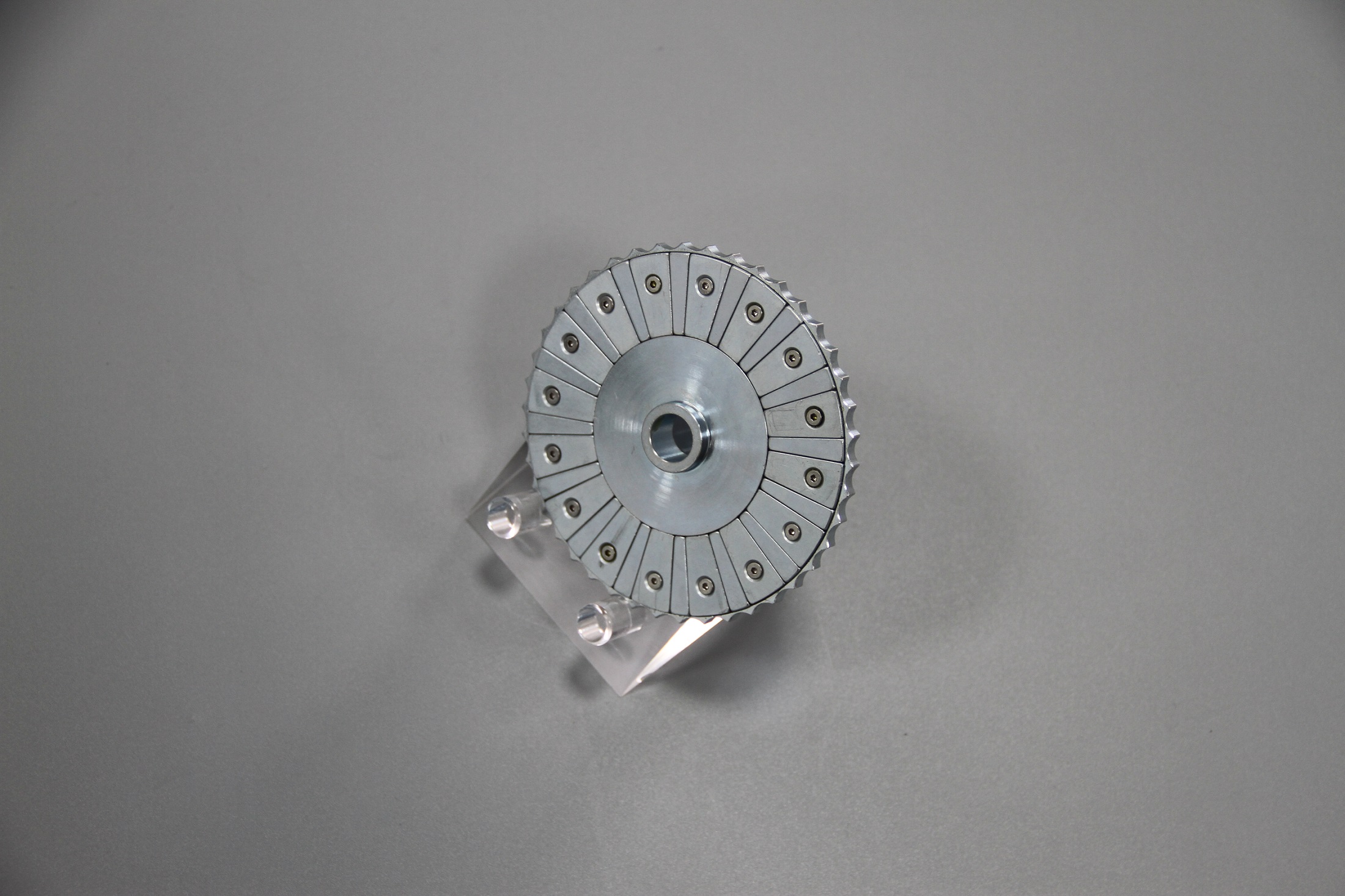
Conceptual diagram showing the physical mounting of the flat rotor for a joint motor (may differ from the actual configuration):
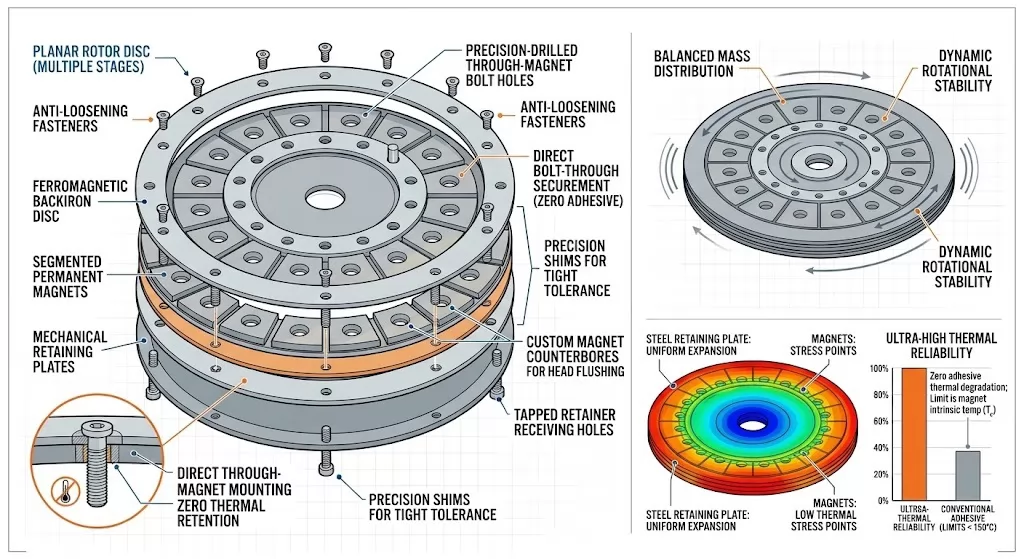
FAIZEAL's dimension-neutral design approach (currently in use)
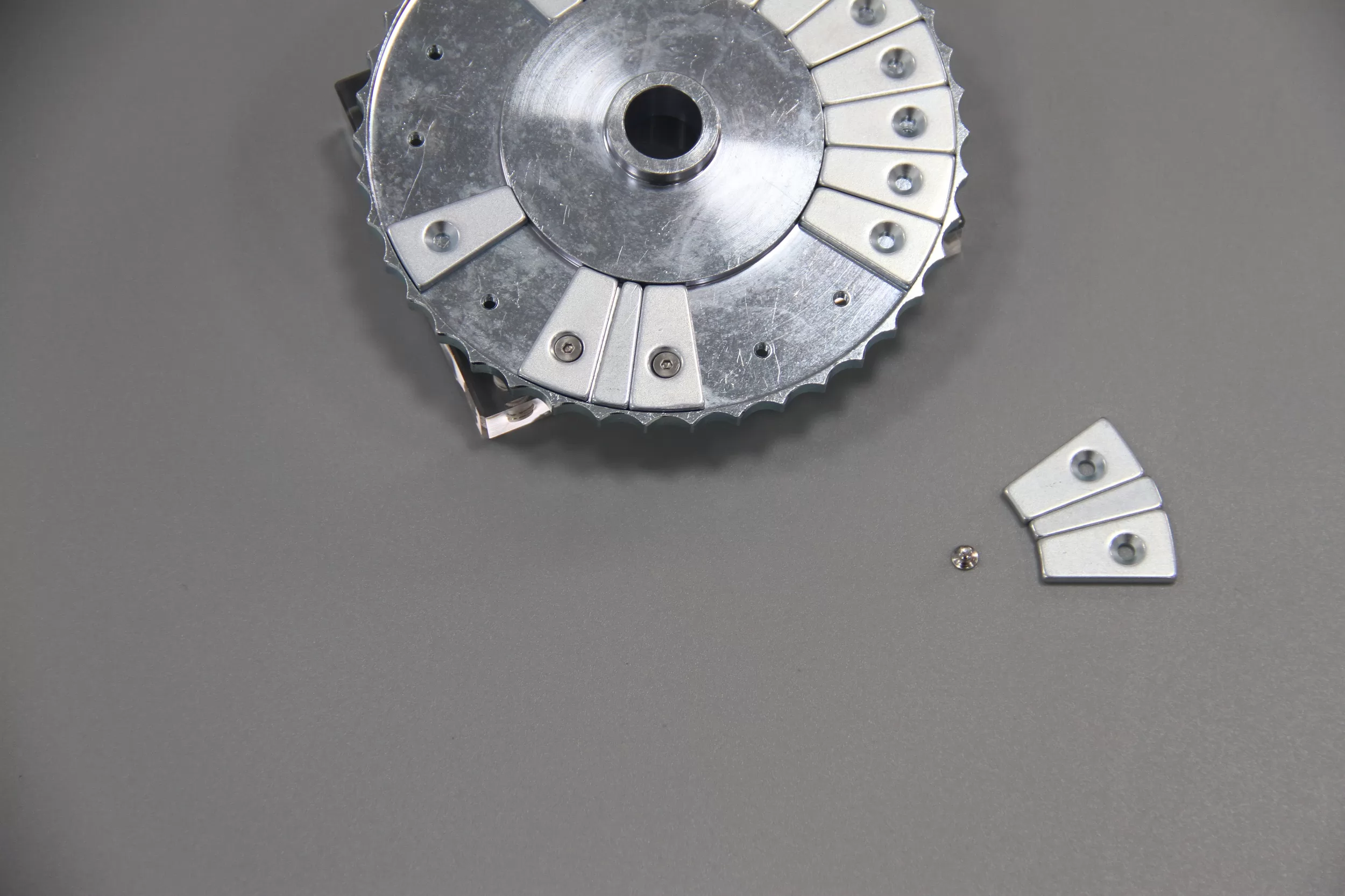
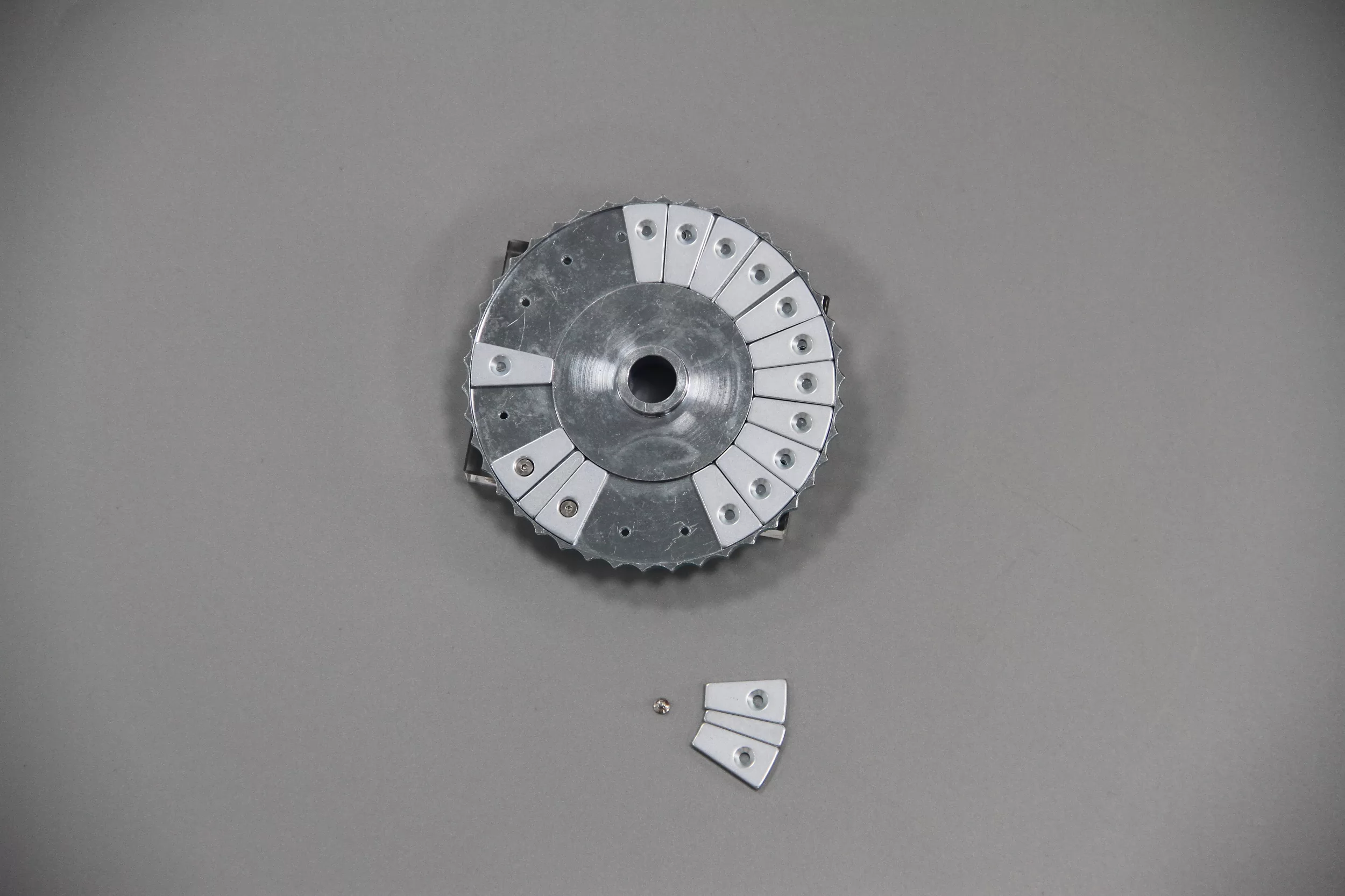
Custom Spoke-Type PMSM Rotors for Robot Joint Motors — Engineered for High-Torque, High-Temperature Applications
We design and manufacture high-performance spoke-type PMSM (Permanent Magnet Synchronous Motor) rotors specifically engineered for humanoid robot joint motors, collaborative robot actuators, and robotic arm servo systems. Every rotor is custom-built to your mechanical, electromagnetic, and thermal specifications — from prototype to mass production.
The Core Challenge: Magnet Retention Beyond 80°C
(H2) Why Magnet Fixation Is the Hardest Problem in Robot Joint Motor Design
In high-performance robot joint motors — particularly those used in humanoid robots, exoskeletons, and force-controlled robotic arms — rotor magnets face continuous thermal stress, vibration, and high centrifugal force. The industry's biggest unsolved challenge? Magnet retention under extreme operating temperatures.
Conventional adhesive bonding (using high-temperature epoxy or structural glue) typically fails between 80°C and 100°C, where most industrial-grade NdFeB magnets begin irreversible demagnetization. For robots operating in continuous high-duty cycles, this is a critical reliability bottleneck.
Our Solution: Hybrid Adhesive + Mechanical Screw Fixation
(H2) Dual-Layer Magnet Fixation: Adhesive Bonding Up to 80°C, Screw-Locked Custom-Shaped Magnets Beyond
We solve this problem by combining two complementary fixation technologies:
Adhesive Bonding (up to 100°C) — for standard operating conditions, we use high-performance structural epoxy to provide uniform stress distribution and excellent magnetic coupling.
Screw-Fixed Custom-Shaped Magnets (100°C+) — for high-temperature and high-reliability applications, we replace conventional arc magnets with custom-shaped NdFeB segments mechanically locked into the rotor back-iron via precision screws. This eliminates adhesive failure modes entirely in critical thermal zones.
Every fixation design is validated through ANSYS Maxwell 3D electromagnetic FEA simulation, optimizing:
Air-gap flux density
Back-EMF waveform (THD)
Cogging torque
Torque ripple
Demagnetization withstand capability
Mechanical stress under max RPM
Maxwell FEA Simulation: De-Risked Design Before Tooling
(H2) ANSYS Maxwell-Validated Electromagnetic Design — No Guesswork, Just Performance
Unlike many robot motor rotor suppliers who rely on off-the-shelf stator/rotor combinations, we run full Maxwell electromagnetic simulations on every spoke-type rotor before cutting a single piece of steel. This dramatically reduces development time, tooling cost, and time-to-market for OEM robotic actuator programs.
What we simulate:
No-load back-EMF and harmonic spectrum
Rated-load torque and torque ripple map
Demagnetization curve under worst-case fault currents
Thermal coupling with housing (for IPM-style heat dissipation)
Mechanical stress at max operating speed
Our spoke-type rotor topology delivers superior torque density (>95% magnet utilization) compared to traditional surface-mounted magnet rotors — making it the preferred choice for compact humanoid robot joints where space and weight are at a premium.
Custom-Shaped Magnets: Solving the Small-Batch Cost Problem
(H2) Cost-Effective Custom-Shaped NdFeB Magnets for Small-Batch Robot Motor Production
Most NdFeB magnet manufacturers charge prohibitive tooling fees and setup costs for non-standard, custom-shaped magnet geometries — especially for prototype and small-batch robot motor production runs. This has historically been the #1 barrier for robotics startups and R&D teams trying to validate novel actuator designs.
We break this barrier through:
Long-term partnerships with top-tier Chinese magnet factories offering preferential tooling and MOQ terms
Modular magnet segmentation design philosophy — breaking arc magnets into standard trapezoid/rectangle segments that fit generic tooling
Shared tooling programs across multiple customers to amortize customization costs
The result? Custom-shaped robot motor magnets at near-commodity pricing, with 2–4 week lead times instead of the industry-standard 8–12 weeks.
In-House Back Iron (Rotor Core) Machining: Full Vertical Control
(H2) Independent Laminated Back Iron Production — From Silicon Steel Sheet to Finished Rotor Core
We don't outsource your rotor back iron. Our vertically integrated production covers:
Silicon steel lamination (0.35mm / 0.5mm thickness options, high-grade non-oriented electrical steel)
Progressive die stamping for high-volume rotor cores
5-axis CNC machining for prototype and small-batch back iron
Annealing and surface insulation treatment
Final rotor assembly with custom-shaped magnets and screw fixation
This in-house back iron manufacturing capability gives our clients:
✅ Rapid prototyping — 7–10 days from CAD to physical rotor
✅ Tight tolerance control — ±0.02mm achievable on critical flux surfaces
✅ Design-for-manufacturing (DFM) feedback during the design phase
✅ IP protection — all tooling stays in-house, never exposed to third parties
Technical Specifications & Capabilities
(H2) Spoke-Type PMSM Rotor — Standard Specifications
Parameter |
Typical Range |
Rotor OD |
30mm – 200mm |
Pole count |
8 10 12 14 16 poles |
Slot configuration |
Fractional slot concentrated winding compatible |
Magnet material |
N35SH – N52SH NdFeB (high-temp grade) |
Operating temp |
-40°C to +1100°C |
Max speed |
Up to 15,000 RPM |
Torque density |
Up to 95% magnet utilization |
Back iron material |
50W470 / 35WW270 silicon steel (custom grades available) |
Tolerance |
±0.02mm on critical surfaces |
Certifications |
ISO 9001, RoHS, REACH compliant |
Applications: Where Our Robot Joint Motor Rotors Are Used
(H2) Trusted by Leading Robotics OEMs Across Multiple Verticals
Our custom robot motor rotors power actuators in:
Humanoid robots — bipedal locomotion, dexterous hand joints, neck rotation
Collaborative robot arms (cobots) — 6-DOF and 7-DOF articulated arms
Surgical robots — high-precision, low-cogging torque applications
Autonomous mobile robots (AMR) & AGVs — wheel hub drive motors
Exoskeleton robots — joint actuators for rehabilitation and powered suits
Precision robotics — semiconductor handling, optical alignment
Drone propulsion systems — high-torque-density BLDC motors
FAQ — Frequently Asked Questions (SEO 精选问题)
(H2) Frequently Asked Questions About Robot Joint Motor Rotors
Q1: What is a spoke-type PMSM rotor and why is it preferred for robot joint motors?
A spoke-type PMSM (Permanent Magnet Synchronous Motor) rotor embeds magnets radially inside the rotor core, providing superior torque density (>95% magnet utilization) compared to surface-mounted designs. This makes it ideal for compact, high-torque robot joint actuators used in humanoid and cobot applications.
Q2: How do you fix magnets in robot motors operating above 80°C?
For high-temperature robot joint motors, we use custom-shaped NdFeB magnets mechanically fastened with precision screws into the rotor back-iron, eliminating adhesive failure modes. Combined with high-temp-grade magnet materials (N35SH–N52SH), this design operates reliably up to 1100°C.
Q3: What software do you use for robot motor electromagnetic simulation?
We use ANSYS Maxwell 3D for full electromagnetic FEA simulation, including back-EMF, cogging torque, torque ripple, and demagnetization analysis — all validated before tooling.
Q4: What is the typical lead time for a custom robot motor rotor prototype?
Standard spoke-type rotor prototypes ship in 7–10 days for back iron and 2–4 weeks for custom-shaped magnets, depending on complexity.
Q5: Can you support small-batch or low-volume robot motor production?
Yes. We support prototype MOQ from 5 units and offer shared tooling programs for small-batch custom-shaped magnet production to keep costs competitive.
Q6: Do you manufacture only the rotor, or full motors?
We specialize in custom rotor design and manufacturing (rotor core + magnets + fixation). We partner with trusted motor assembly houses for full motor integration if needed.
0
Comments
Leave a Comment
Your email address will not be published. Required fields are marked *
Name can't be empty
Email error!
Message can't be empty
😍
😜
😳
😌
😄
😘
😝
😒
😃
😚
😚
😛
😟
😧
😀
😉
😓
😱
😤
😣
😂
😥
😩
😠
😢
😭
😰
😨
😡
😆
😪
😅
😐
😇
😋
😴
👿
😕
😏
😷
😵
😟
😮
😯
😑
👧
👴
😧
😬
😾
👶
👱
👵
👸
🙀
👺
👦
👩
👨
😽
😿
🙈
💩
💥
💤
😼
😹
🙉
🔥
✨
💦
👎
✌
👆
👈
💪
💹
👍
👊
💴
💶
💷
💸
👉
💵
🙏
🌎
🏧
👏
💳
👇
💑
🙆
🙅
💁
👫
👭
🙎
🙇
👑
👔
Submit Comment
Most Popular
-
 Dec 25, 2024Top 10 Ndfeb Magnet Manufacturers and Suppliers in the World 2025
 -
 Jun 18, 2026What is a Magnet Made of and How Does it Work?
 -
 Sep 27, 2023What is a Magnetic Wheel and How Does it Work
 -
 Sep 28, 2023Top 10 Permanent Magnet Motor Rotor Manufacturers in the World


Laster Blogs
-
 Sep 16, 2026High-Temperature Resistant Bonding Solution for Flat Rotor Magnets in Robot Joint Motors
 -
Jun 18, 2026What is a Magnet Made of and How Does it Work?
-
 Jun 05, 2026Magnetic Wheels vs Manual Labor: A New Chapter in Wind Turbine Cleaning and Inspection
 -
 Jun 05, 20265 Things You Need to Know About Pot Magnets


Set A Consultation Today
Name can't be empty
Email error!
Send Your Message
*We respect your confidentiality and all
information are protected.